IP blocklists: an in depth guide
Active Campaign Detected Across the Sensor Fleet
Published:
28 February 2026
By:
Xavier Bellekens
Summary
IP blocklists, also known as IP blacklists, are an important defence against a wide range of online threats, from minor annoyances to severe security breaches. This article explains what IP blocklists are, why they matter and how they are implemented across different platforms and networks.
What is an IP address blocklist?
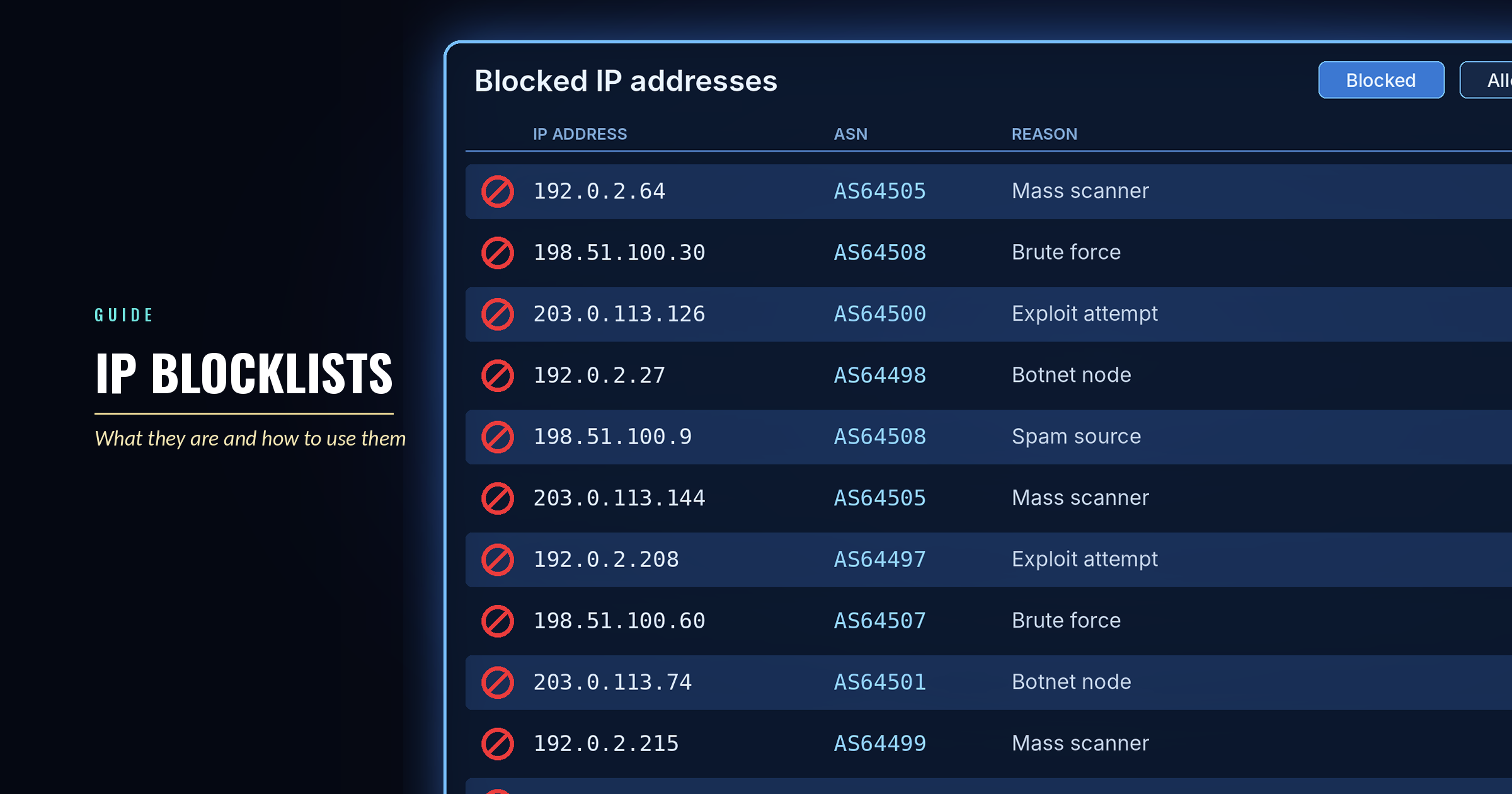
An IP blocklist is a database of IP addresses identified as sources of undesirable or harmful internet activity. These blocklists cover individual IPs and also ranges of addresses linked to malicious behaviour.
Such lists help to shield servers, mail servers, internet service providers and other networked systems from digital threats. Using a blocklist is a proactive way to filter and block harmful traffic, which protects the integrity and security of digital systems. Understanding their role and scope is useful for anyone involved in network management or digital security, and for individual users who want to protect their online presence.
Understanding malicious IP addresses
Malicious IP addresses are those that have been implicated in harmful or unauthorised online activities, such as distributing malware, carrying out cyber attacks or engaging in online fraud. These addresses are flagged in various blocklists because of their history of malicious behaviour, which can range from minor policy violations to severe security threats.
Identifying and managing malicious IPs is a complex process that involves constant monitoring, analysis and updates, so that new threats are addressed promptly. Categorising an IP as malicious is a critical step in maintaining online safety and is typically handled by specialised cybersecurity agencies and software.
Causes of IP address blocklisting
IP addresses can be blocklisted for many reasons. The most common include distributing spam emails, hosting malicious content such as viruses or phishing sites, participating in DDoS attacks, being part of a botnet, or scanning for known vulnerabilities.
These activities often lead to an IP being flagged as a threat. A listing can also result from shared hosting environments, misconfigurations or unauthorised use of an IP address. The consequences of being wrongly blocklisted can be significant, affecting communication and access to services and damaging the reputation of the associated domain or network.
A valid IP address can also be blocklisted because your organisation has been compromised and is enrolled in a known botnet, scanning the internet for new targets.
Finding and identifying blocked IP addresses
For administrators, webmasters and IT professionals, identifying whether an IP address is on a blocklist is a critical task. This is typically done using specialised blocklist checker tools. Lupovis can determine whether a specific IP address is listed in its global blocklist.
This verification is essential for maintaining the health and reputation of a network or domain. If an IP is mistakenly blocklisted, it can lead to communication barriers, email delivery issues and a loss of trust among clients or users. Regular checks and prompt action to resolve any listing are therefore part of effective digital management.
Reputation intelligence: beyond traditional blocklisting
Reputation intelligence is a more advanced form of IP blocklisting, which combines the traditional methods with analytics and predictive modelling. By evaluating an IP address's history of behaviour and current activity patterns, reputation intelligence tools can offer a more detailed view of how far an IP can be trusted. This insight helps to identify potential risks and threats in advance, which gives a more proactive and effective means of protecting digital assets.
Dynamic IP blocklists for enhanced infrastructure security
Dynamic IP blocklists are updated in real time, reflecting the latest intelligence on IP addresses associated with malicious activities. By integrating dynamic blocklists into network security systems, organisations can ensure a more responsive and effective defence against emerging threats. This real time updating is essential in an online landscape where threats evolve rapidly.
Where to find an IP address blocklist
Lupovis
At Lupovis we monitor the state of the internet minute by minute with sensors deployed around the world. The sensors record every interaction and use data analysis and machine learning to categorise the type of interaction through behavioural analysis. Examples include mass scanning, searching for a zero day, exploiting a known vulnerability and WordPress exploitation.
We then analyse the set of interactions from a single adversary and categorise adversaries, such as script kiddies, ransomware groups and APTs.
Based on all of the suspicious activity we collate, we create appropriate IP blocklists for customers to use. The dynamic blocklist is updated every 60 seconds, so you are always protected from the latest threats.
Spamhaus Project
One of the most widely recognised IP blocklists is the Spamhaus Project, known for its extensive database of spam related IPs.
Project Honey Pot
Project Honey Pot is a service that identifies spam and abuse related IPs by gathering data from its network of websites.
While free blocklists are valuable resources, their effectiveness can be limited. They often face challenges in staying up to date with the rapidly evolving landscape of cyber threats. This can lead to new malicious IPs not being added promptly, or to IPs that are no longer a threat remaining listed. Free services provide a good starting point for IP blocking, but they should ideally be supplemented with other security measures.
Implementing an IP address blocklist
Using IP blocklists effectively strengthens the security of your digital infrastructure, whether that is a network protected by a Fortinet firewall or a WordPress website.
On a Fortinet firewall, administrators can use the firewall's security features to implement blocklists. This is done by accessing the firewall's management interface, navigating to the security policies section, then creating or modifying a policy to include the desired IP blocklist. The policy then actively blocks traffic from the listed IPs, protecting the network from potential threats.
For a WordPress website, the process involves using a plugin that supports IP blocklists. The plugin provides an interface where website administrators can input or upload lists of malicious IP addresses. Once added, the website automatically denies access to these IPs, protecting the site, the domain and its accounts from attack.