Catch attackers the moment they touch a sensor
Sensors across your environment turn a single interaction into a real, ranked signal of who is moving against you, with a 0% false positive rate.


The Problem
By the time hostile activity shows in your logs, it is buried under legitimate traffic and false positives, and detection happens late. Generic baselining flags a lot and confirms little.
Questions this page answers
What did our sensors observe?
Which source or group is behind it?
How severe and how confident is the signal?
When was it last seen?
How does it connect to the wider threat landscape?
What should the SOC investigate next?
How Lupovis helps you detect
A 0% false positive rate.
Nothing legitimate has any reason to touch a sensor, so every interaction is a real signal. No tuning, no alert fatigue.
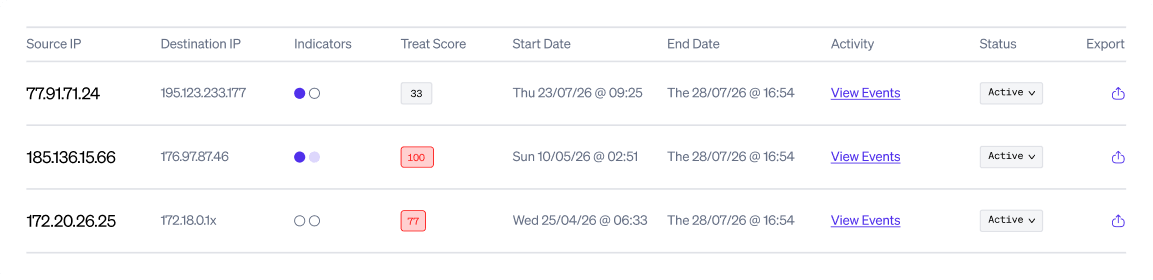
Threats nothing else caught.
Sensors have surfaced hostile activity that no other tool in the stack had seen, because the signal does not depend on a known signature.
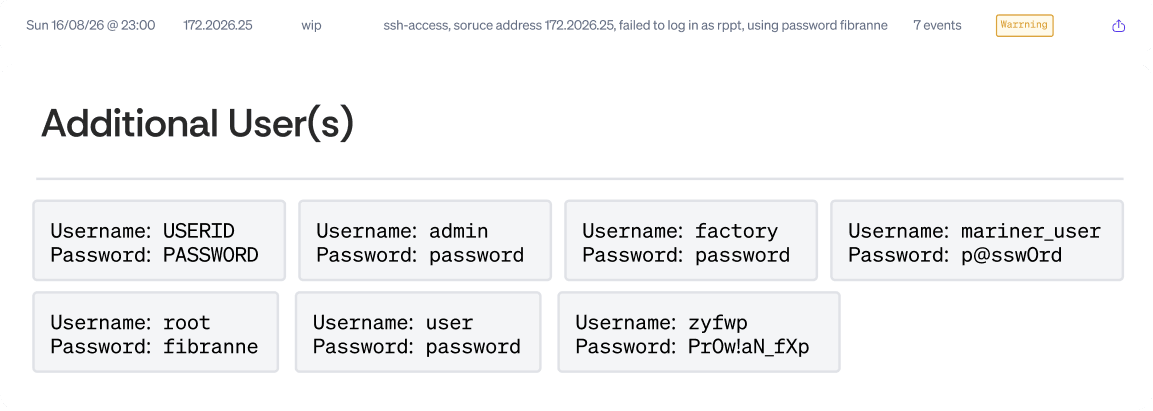
Ranked by severity and confidence.
Sensor observations arrive ordered, so the most serious, highest-confidence hit is at the top.
Connected to the bigger picture.
Sensor activity feeds the same threat-led defence view as origins, products and the kill chain.
Data available
Field
Why it matters
Observed signal
CVEs observed
Shows which CVEs this IP address has tried to exploit before.
Observed signal
Behaviour and techniques identified
Shows which techniques this IP address has used before.
Observed signal
Last seen
Shows whether the source is still active.
Observed signal
Source IPs
Shows the IP address carrying out the attack.
Observed signal
Threat score
Gives a numerical score based on the variety of attacks seen from this source.
Observed signal
Destination or asset touched
Shows which service or asset inside your network the source reached.
Observed signal
Interaction type
Shows whether it was a login, scan, file open, token use or service request.
Interactions
Credential used
Shows whether a planted credential was tried, which no legitimate user would do.
Configuration
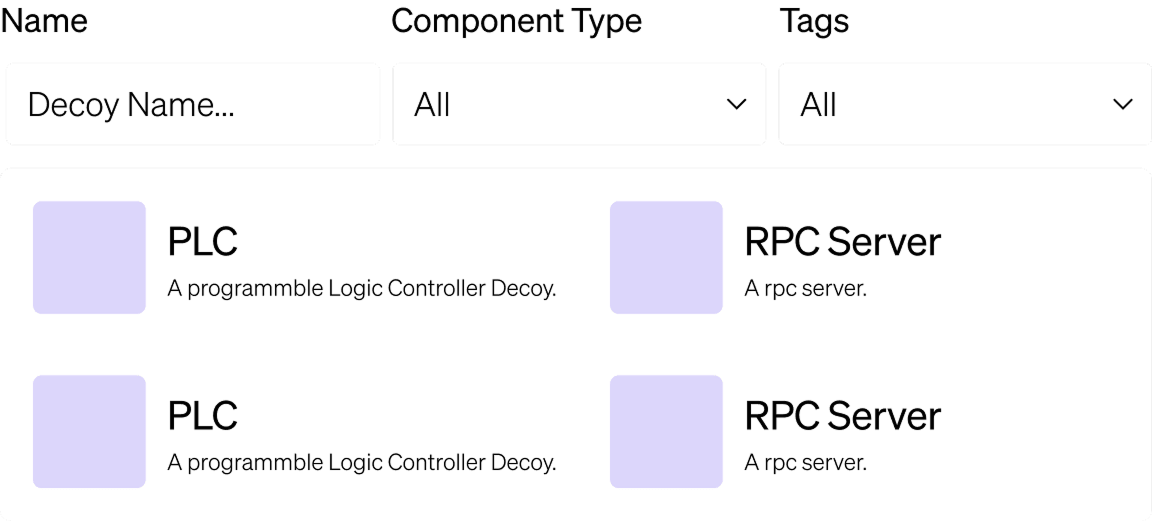
Sensor name
Shows which internal sensor was touched.
Configuration
Sensor type
Shows whether the sensor was a server, file, credential, token or application.
Configuration
Hostname
Shows which device the interaction came from.
Configuration
User
Shows the user account linked to the interaction.
Every sensor hit is real. Act on the ranked ones first.
Explore other use cases

Stop breaches before they happen
Get a 30-minute walkthrough with the Lupovis team. We'll show you activity already targeting organisations like yours.