Prioritise CVEs by what attackers
are actually exploiting
See which vulnerabilities in your stack are under active attack, ranked by exploitation likelihood, not severity score alone.


The Problem
CVSS and EPSS give you a severity number and a probability, but both are predictions. Neither shows whether the technology you run is being exploited right now, whether through a known CVE, a zero-day or an n-
day attack. So teams patch the highest score while real, active exploitation of their stack goes unaddressed.
Questions this page answers
Which CVEs are relevant to my organisation profile?
Is this CVE being observed in real activity?
Which IPs, ASNs and countries are involved?
What is the exploitation likelihood, not just the CVSS?
Is it in KEV, and when was it published?
Should we patch, monitor, block or investigate?
How Lupovis helps you prioritise
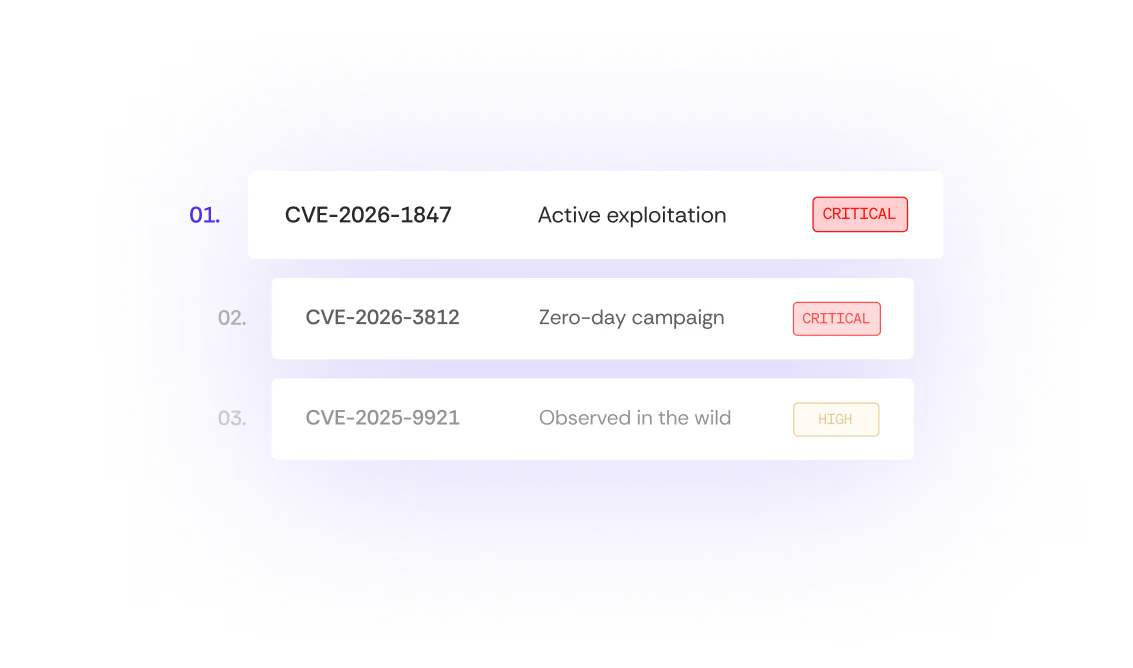
Rank by real exploitation.
Unlike CVSS and EPSS, Lupovis does not add another score. It shows the CVEs and technologies under real, observed exploitation, including zero-day and n-day activity, so the top of the queue is what is actually being attacked.
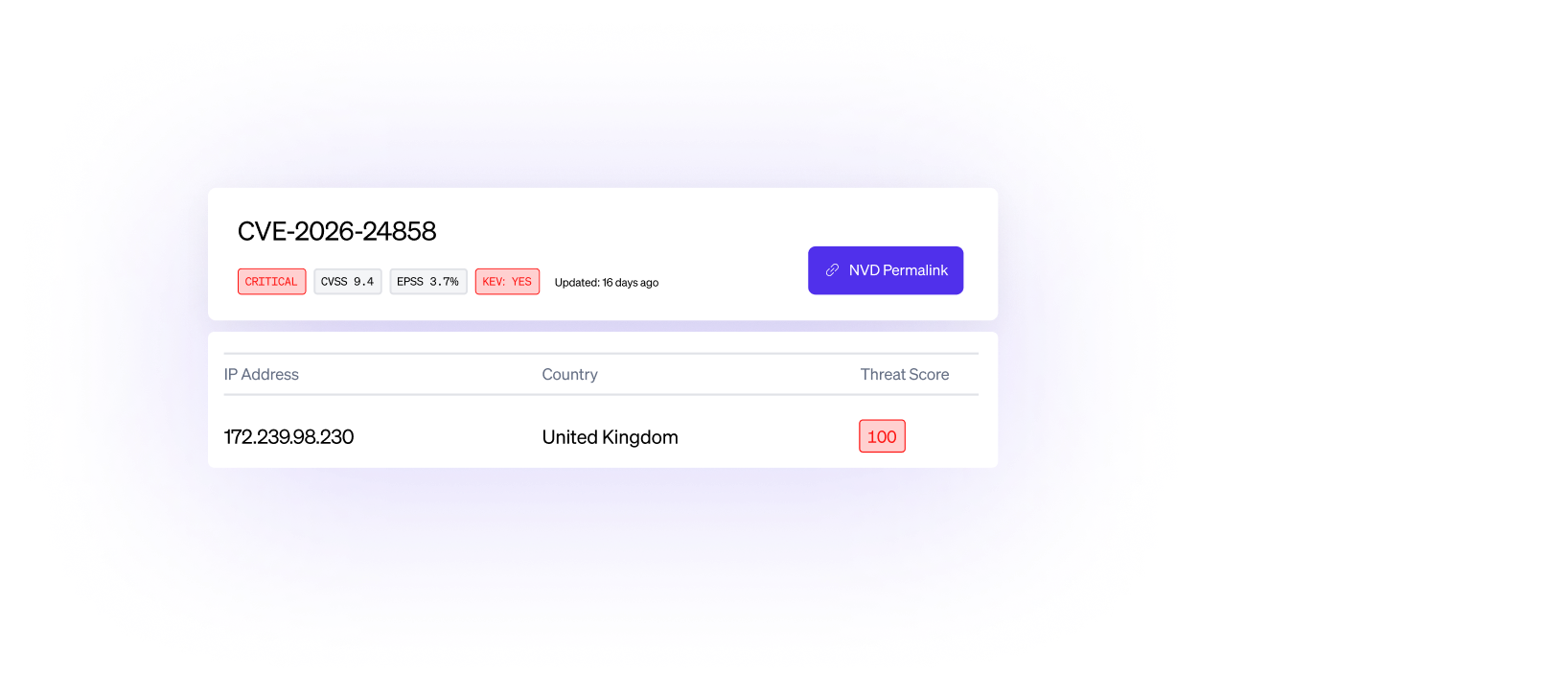
See the infrastructure behind each CVE.
Every CVE links to the source IPs, ASNs and countries interacting with it, so you can block the activity while you patch the flaw.
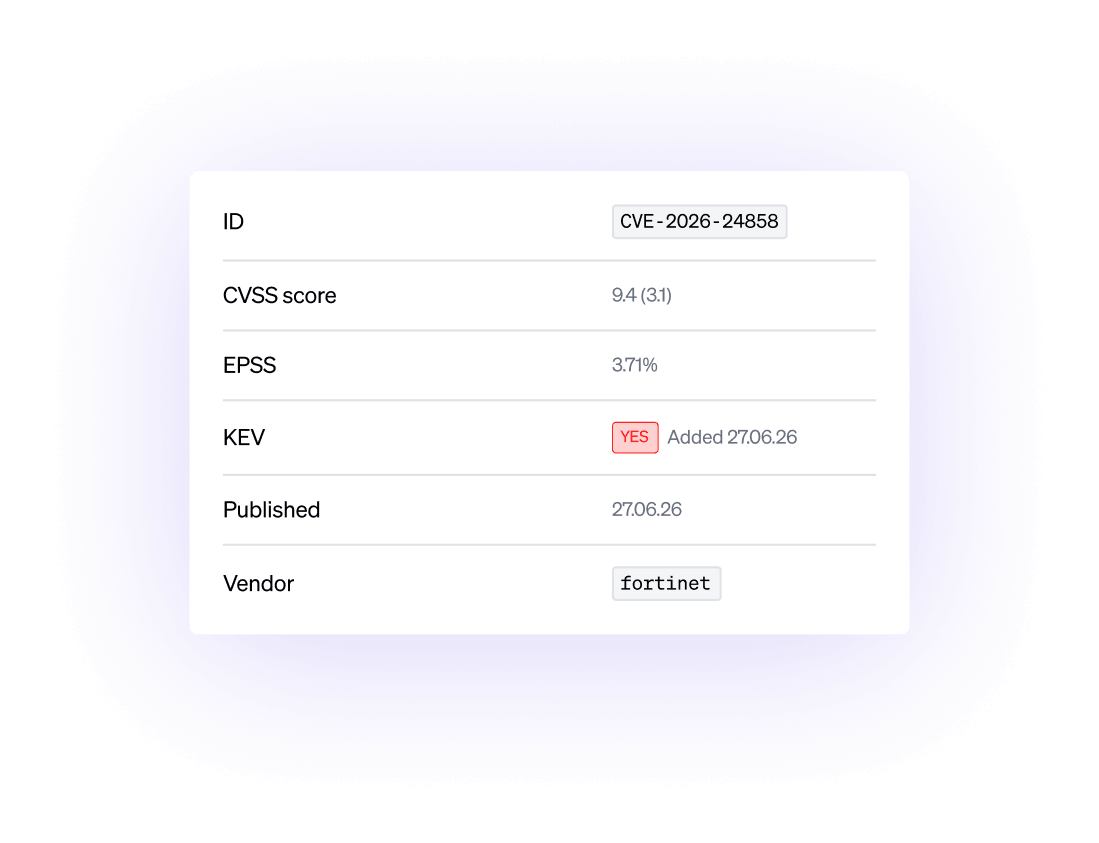
Read the full enrichment in one place.
CVSS, EPSS, KEV status with its added date, published date and vendors sit together, so the patch decision does not need five tabs.
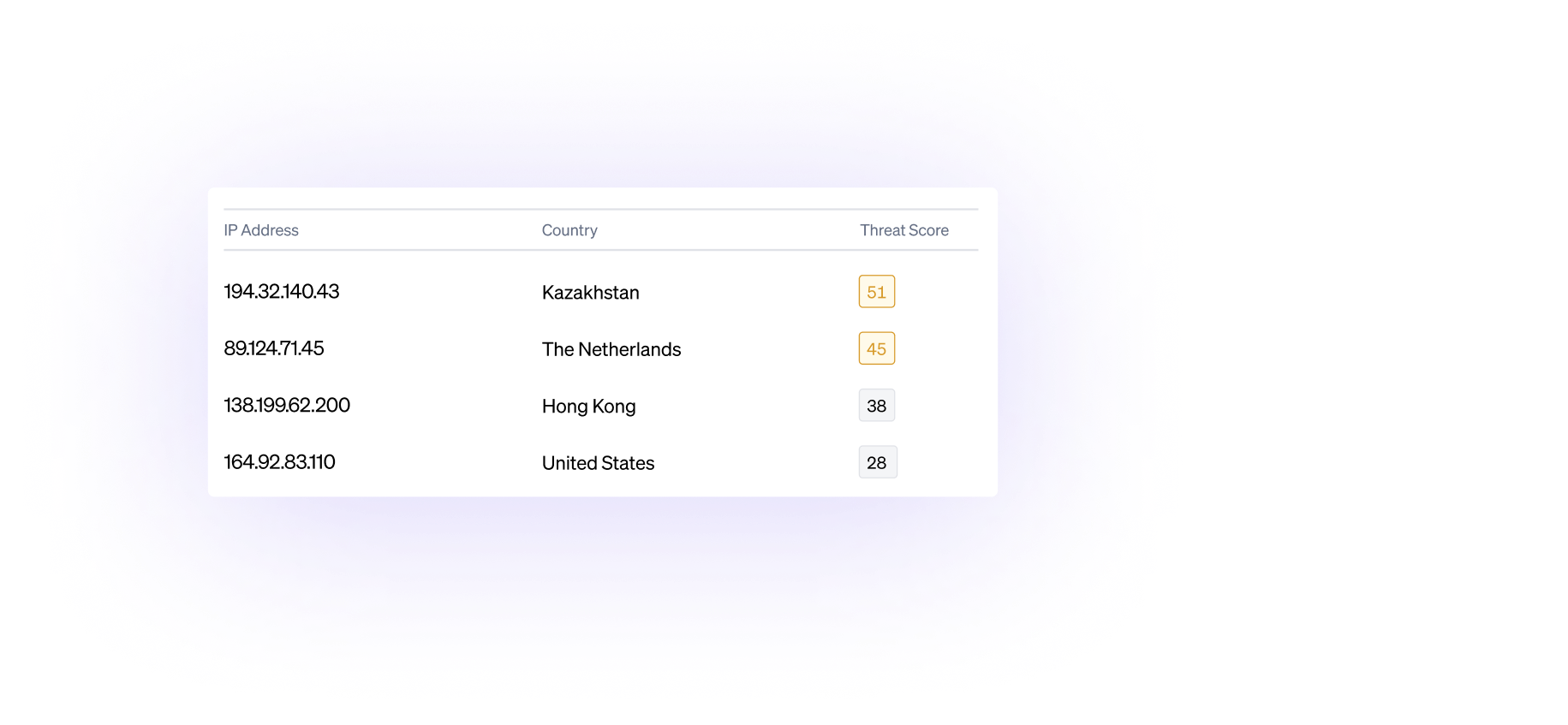
Block the most active sources first.
Every source IP carries a threat score based on its observed activity across our sensor network, so your team can block the most persistent infrastructure first and keep blocklists focused on what is actually hitting you.
Data available
Field
Why it matters
Observed signal
CVEs observed
Shows which CVEs this IP address has tried to exploit before.
Observed signal
Source IPs
Shows the IP address carrying out the attack.
Threat detail
CVE
Gives you the standard ID for the vulnerability.
Threat detail
Affected product
Shows which product the vulnerability affects.
Threat detail
CPEs
Gives the official product and vendor string used across security tools.
Threat detail
Published date
Shows when the CVE was announced.
Threat detail
CVSS score and level
Shows how severe the vulnerability is on the standard scale.
Threat detail
EPSS score
Shows how likely the vulnerability is to be exploited.
Threat detail
KEV status and date
Shows whether the vulnerability has been exploited in the wild and since when.
Threat report
CVE
Shows whether exploitation of a CVE has been seen in the wild.
Threat report
Example interaction
Shows a captured interaction from the attack.
Threat report
Frequency count
Shows how often this type of attack has been seen.
Patch what is being exploited, not just what scores highest.
Explore other use cases

Stop breaches before they happen
Get a 30-minute walkthrough with the Lupovis team. We'll show you activity already targeting organisations like yours.