Defend against threats before they become a breach
A single command centre for the threat actors, techniques and origins targeting your organisation, attributed and mapped to the kill chain while the activity is still reconnaissance.


The Problem
Most intelligence tells you about a breach after it happens, or floods you with indicators that were never aimed at you. By the time you know a named actor is targeting your organisation, they are usually already inside.
Questions this page answers
Which threat actors are relevant to my organisation?
Which kill-chain stages are active against us right now?
Where is the activity coming from, by country and ASN?
Which of our products are most at risk?
What did our sensors observe?
What should the SOC and CTI teams focus on this week?
How Lupovis helps you prioritise
Catch it before the breach.
Lupovis surfaces hostile activity while it is still reconnaissance and attributes it, so you act before initial access rather than after.
Tracked and linked across entities.
Lupovis follows the infrastructure, threat groups, indicators of compromise and behaviours behind each event and links them, so one entity opens every connected one.
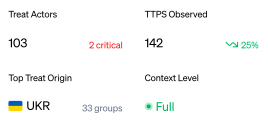
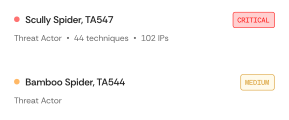
Know who is aimed at you.
The Threat Landscape and Threat Origins name the groups and ASNs targeting you and grade them by link strength, so a recon spike arrives labelled, APT41 for example, not as an anonymous IP.
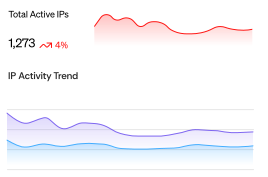
Watch your sensors.
Imminent Threats ranks what your sensors observed by severity and confidence, so the earliest, cleanest signals reach you first.
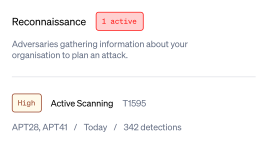
See the kill chain in motion.
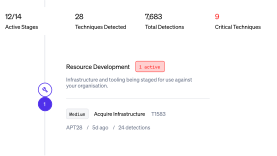
The MITRE Timeline shows which stages are active, with detections and the groups behind each technique, so you see how far an actor has moved.
Data available
Field
Why it matters
Action
TTP protection controls
Shows the common controls that protect against this technique.
Action
TTP exploit method
Shows how to check whether you are vulnerable to this technique.
Attribution
Group Infrastructure links
Shows infrastructure linked to known threat groups.
Attribution
Group name
Gives you a common name for each threat group.
Attribution
Group country
Shows the country the group is linked to.
Attribution
Motivation
Shows why the group has attacked organisations in the past.
Attribution
Sectors observed
Shows which sectors the group is known to target.
Attribution
Countries observed
Shows which countries the group is known to target.
Attribution
TTP IDs linked to the group
Shows the techniques the group has used before, so you can see how it might attack you.
Behaviour
TTP Description
Explains what a technique involves beyond its name or ID.
Behaviour
Kill-chain stage
Shows which stage of an attack the technique is used in.
Behaviour
MITRE ID
Gives you the standard ATT&CK reference for the technique.
Threat detail
Affected product
Shows which product the vulnerability affects.
Threat detail
CPEs
Gives the official product and vendor string used across security tools.
Threat detail
Published date
Shows when the CVE was announced.
Threat detail
CVSS score and level
Shows how severe the vulnerability is on the standard scale.
Threat detail
EPSS score
Shows how likely the vulnerability is to be exploited.
Threat detail
KEV status and date
Shows whether the vulnerability has been exploited in the wild and since when.
Threat report
Behaviour and techniques
Shows whether a technique has been seen in the wild.
See the actor at reconnaissance, not after the breach.
Explore other use cases

Stop breaches before they happen
Get a 30-minute walkthrough with the Lupovis team. We'll show you activity already targeting organisations like yours.